 中文
中文 Español
 Français
 العربية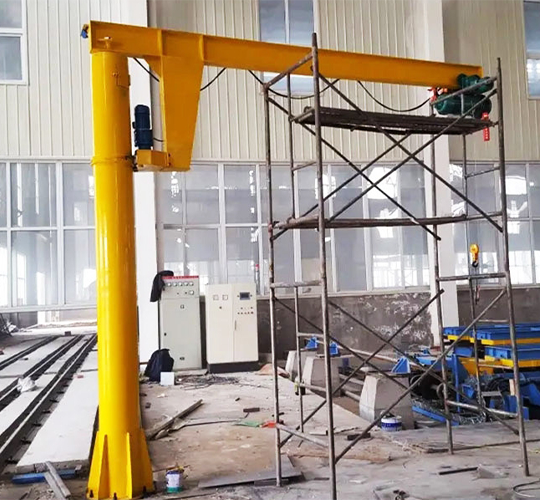
SHANDONG LONGHUI GROUP CO., LTD.Shandong Longhui Crane Machinery
xxxxxxxxx
Leave a message
A small Cantilever Crane is a compact and efficient lifting machine commonly used in various industries, such as construction, manufacturing, warehousing, and even in smaller workshops. Known for its versatility and space-saving design, this type of Crane is especially useful in areas with limited overhead space or those requiring precise load handling in confined environments.
In this guide, we will explore the key features, applications, advantages, and considerations involved when selecting a small cantilever crane. Whether you are a business owner, project manager, or crane operator, understanding the functionality and benefits of this equipment will help you make more informed decisions when it comes to investing in material handling solutions.
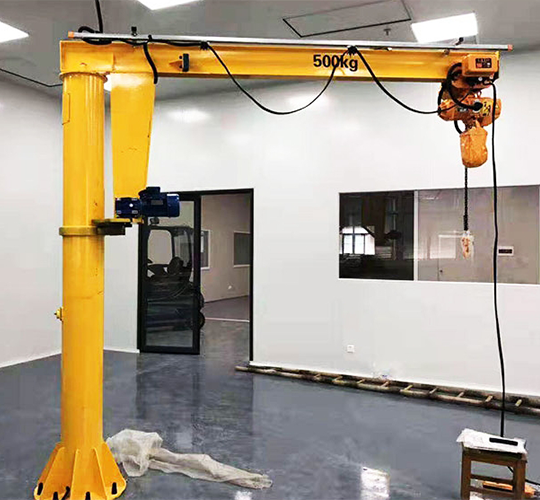
A cantilever crane is a type of crane with a horizontal arm (or cantilever) that extends outward from a vertical structure, such as a wall, column, or a base. Unlike other types of cranes, which require extensive ground support or rail systems, small cantilever cranes are designed to be more compact and efficient, making them ideal for small workshops, warehouses, and light-duty industrial applications.
The key components of a small cantilever crane include:
Cantilever Arm: The horizontal extension of the crane that carries the load.
Column or Support Structure: The vertical component that supports the cantilever arm.
Hoist: The mechanism that lifts and lowers the load, often powered by electric or manual systems.
Slewing Mechanism: Some models feature a slewing or rotating function, allowing the arm to rotate horizontally to cover a wider area.
Controller: A control panel or remote that allows operators to manage lifting operations and adjust the crane’s movements.
Compact Design
One of the main advantages of small cantilever cranes is their compact design. These cranes require minimal floor space, making them suitable for environments with limited room. The crane can be installed directly on walls, ceilings, or other structures to maximize available floor space.
Easy Installation and Flexibility
Small cantilever cranes are relatively easy to install and can be adapted to fit the layout of the workspace. Some cranes are wall-mounted, while others are ceiling-mounted or attached to columns. This flexibility makes them ideal for businesses looking to optimize existing spaces.
Precision and Control
These cranes often feature manual or electric hoists that provide precise control over load lifting. Operators can move heavy items with accuracy, reducing the risk of accidents and improving productivity.
Load Capacity
Small cantilever cranes typically have a load capacity ranging from 250 kg to 5 tons, depending on the model and design. This range allows them to handle light to medium-duty lifting tasks with ease.
Slewing and Rotation
Some small cantilever cranes are equipped with a slewing mechanism that allows the crane arm to rotate horizontally. This feature enhances the crane’s ability to cover a wide area, improving the efficiency of material handling in confined spaces.
Durability
Made from high-quality steel or other robust materials, small cantilever cranes are designed to withstand frequent use in demanding environments. They offer long-lasting durability and can operate in harsh industrial settings with minimal maintenance.
Small cantilever cranes are versatile machines that can be used across many industries and settings. Here are some common applications:
Warehouse and Storage Facilities
In warehouses and storage facilities, small cantilever cranes are used to move goods, load and unload pallets, and organize inventory. Their ability to operate in narrow aisles and tight spaces makes them an invaluable tool in maximizing storage capacity.
Manufacturing
In manufacturing plants, these cranes are used to lift and position heavy components in assembly lines or workstations. They are particularly useful for tasks that require high precision, such as lifting delicate machinery parts or assembling products in confined spaces.
Construction Sites
On construction sites, small cantilever cranes can be used for lifting building materials such as bricks, cement, and tools. Their ability to be mounted on walls or columns helps contractors make the most of limited space on construction sites, especially in urban environments where space is tight.
Workshops and Small Factories
In smaller factories or workshops, small cantilever cranes can be used for lifting tools, machinery, and raw materials. They are particularly beneficial for operations that require frequent lifting but do not need large overhead cranes.
Loading and Unloading
Cantilever cranes can be installed on docks, loading bays, or truck beds to assist with loading and unloading goods. The ability to extend and rotate the crane arm makes it easier to handle goods that need to be placed on trucks or into containers.
Heavy Equipment Maintenance
In industries that require the maintenance of heavy equipment, small cantilever cranes can be used to lift parts and machinery. These cranes are ideal for use in repair shops where technicians need to remove or install heavy components safely.
Space Efficiency
Small cantilever cranes maximize vertical space and minimize the need for ground-level space. This is especially beneficial in environments where floor space is limited and every square meter counts. The crane can be mounted on walls or overhead structures, freeing up valuable floor space for other operations.
Increased Safety
With proper load balancing and operator training, small cantilever cranes can enhance workplace safety. These cranes are designed to operate with a high degree of control, which reduces the risk of accidents. Additionally, their compact design and ease of use make them safer compared to larger, more complex cranes.
Cost-Effective
Due to their smaller size and more straightforward design, small cantilever cranes are generally more affordable than large overhead cranes or gantry systems. For small to medium-sized businesses, they offer a cost-effective solution for material handling without requiring significant investment.
Efficiency and Productivity
These cranes provide operators with an efficient means of moving loads within confined spaces. Their ability to rotate, extend, and lift heavy loads without the need for extensive space means that material handling tasks are completed faster, improving overall productivity.
Low Maintenance Requirements
Small cantilever cranes are designed for ease of maintenance. Their compact design and fewer moving parts mean that maintenance and repairs are typically less frequent and less expensive than those of larger crane systems. Routine inspections and basic care are usually sufficient to keep the crane running smoothly.
Adaptability
Small cantilever cranes can be customized to meet specific needs. Options such as different hoisting capacities, crane arm lengths, and additional features like electric drives or rotating arms allow businesses to tailor the equipment to their operations.
Before purchasing a small cantilever crane, there are several factors to consider:
Load Capacity
Ensure that the crane you select is capable of handling the weights that need to be lifted. Overloading a crane can lead to mechanical failure and pose a significant safety risk. Check the load capacity of the crane to make sure it meets your requirements.
Space Requirements
Consider the layout of your workspace and where the crane will be installed. Make sure the cantilever crane can be mounted in the desired location and that it will have enough space to operate efficiently.
Power Source
Determine the power source for the crane. Small cantilever cranes may come with manual, electric, or hydraulic hoists. Choose the one that best fits your operational needs.
Safety Features
Safety should be a top priority when selecting any lifting equipment. Ensure that the crane is equipped with appropriate safety features, such as limit switches, overload protection, and emergency stop mechanisms.
Installation and Maintenance
Consider the ease of installation and the long-term maintenance needs of the crane. Opt for a model that is easy to install and maintain, with readily available parts and support from the manufacturer.
Compliance with Regulations
Ensure that the crane complies with local and international safety standards. This includes checking that it meets the relevant regulations for weight capacity, lifting height, and safety protocols.
Small cantilever cranes are an excellent solution for businesses and industries looking for efficient, space-saving lifting equipment. Their compact design, versatility, and cost-effectiveness make them an attractive option for a wide range of applications, from small workshops to large manufacturing plants. By carefully considering your load requirements, space limitations, and safety features, you can select the perfect small cantilever crane to optimize your material handling processes and improve productivity.
Contact: Ding Jinjun
Phone: 15966038337
Email: 15966038337@163.com
Address: Yangliu Industrial Park, Xintai City, Shandong Province
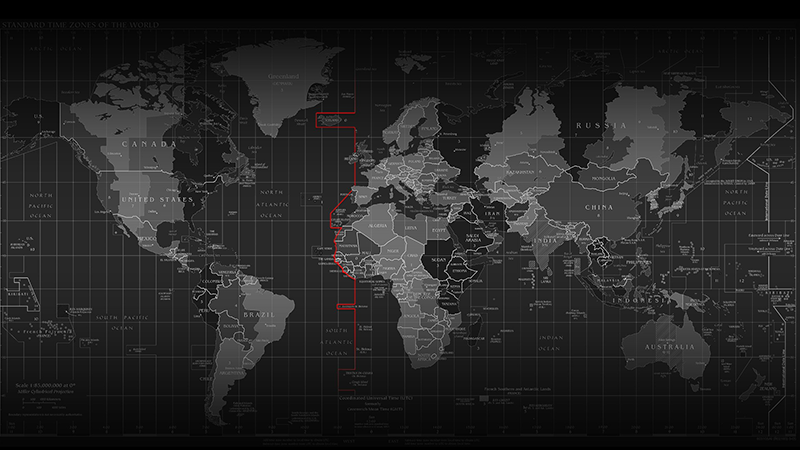
Central Asia, Southeast Asia, Middle East, South America, Africa
Shandong Longhui Crane Machinery Co., Ltd. was founded in 1992 and is a professional manufacturer of various types of lifting equipment with a registered capital of RMB 318 million. Mainly engaged in the design, manufacturing, installation, renovation, maintenance and other businesses of general bridge cranes, gantry cranes, metallurgical cranes, explosion-proof electric hoists, wire rope electric hoists, European Style Cranes and other products. The products involve 30 series and 6000 categories.
The company covers an area of 120000 square meters and currently has more than 1200 employees, including 32 middle and senior management personnel, 18 senior engineers, 106 intermediate engineers, and 272 engineering and technical personnel. It has more than ten functional departments including design, production, quality inspection, safety, etc., including electrical automation, raw materials, riveting and welding, assembly, heat treatment, machining, electric hoist, maintenance and other workshops. The company has 328 sets of advanced production equipment, more than 300 pieces of various testing instruments and measuring instruments, with good performance and effective calibration, and is a third level qualified measurement unit. The company has sales and service agencies in various provinces, cities, and other regions across the country, radiating to major power plants/steel mills, manufacturing enterprises, industrial and mining enterprises, ports and terminals, and cargo distribution centers.
Rated lifting capacity/rated lifting capacity:
Gn=5, 10t, 16t, 20t,
Limit span:
7.5m≤S<50m
Job level/work class:
JC=25%, A3 level
Lifting mechanism/lifting mechanism:
Single electric hoist, dual electric hoist
Effective lifting height:
6m≤H<30m
In modern construction and manufacturing industries, Cranes play a vital role. As heavy machinery designed for lifting, hoisting, and transporting objects, cranes significantly enhance work efficiency, reduce manual labor intensity, and ensure the safety and quality of engineering projects. Whether on construction sites or in large manufacturing facilities, cranes provide reliable support for completing complex tasks.
1. Basic Structure and Working Principle of Cranes
Cranes typically consist of several key components, including the boom, hook, winch, motor, and control system. The boom, the primary structure, supports or suspends the load. The winch, powered by the motor, provides the force to lift the load. The control system enables precise operation of the entire lifting process. Cranes operate based on the lever principle, moving objects vertically by adjusting the load’s center of gravity.
2. Applications of Cranes in Construction
In the construction industry, cranes are indispensable. They are essential for handling heavy materials such as steel beams, concrete blocks, bricks, and prefabricated components. Key applications include:
Material Lifting and Transport: Cranes lift heavy construction materials from the ground to upper floors of high-rise buildings, enabling efficient vertical logistics.
Modular Construction: Prefabricated elements (e.g., steel frames, concrete panels) are hoisted into place by cranes, accelerating project timelines and improving precision.
Safety and Efficiency: Cranes minimize manual handling risks, enhance site safety, and ensure stable operations in challenging environments like uneven terrain or extreme heights.
3. Roles of Cranes in Manufacturing
Cranes are equally critical in manufacturing, where they streamline processes such as raw material handling, equipment installation, and warehouse management:
Raw Material Transport: In industries like steel production and automotive manufacturing, cranes move heavy materials (e.g., metal ingots, ore) to production lines or storage areas.
Equipment Assembly: Cranes position large machinery parts with precision, reducing installation errors and labor risks.
Automated Warehousing: Cranes facilitate high-speed material retrieval and storage in large warehouses, supporting efficient inventory management.
4. Types of Cranes
Different crane types cater to diverse operational needs:
Tower Cranes: Common on high-rise construction sites, these offer long booms and high lifting capacities for vertical material delivery.
Crawler Cranes: Ideal for rough terrains (e.g., mining sites or oil fields) due to their tracked mobility and stability.
Mobile Cranes: Mounted on trucks, these combine flexibility with rapid deployment for small-to-medium projects like road repairs.
Overhead Cranes: Used in factories and ports, these traverse along rails to handle horizontal and vertical material movement.
5. Future Trends in Crane Technology
Advancements in automation and sustainability are shaping the evolution of cranes:
Intelligent and Automated Systems: Integration of AI, IoT sensors, and data analytics enables predictive maintenance, automated load positioning, and error reduction.
Eco-Friendly Designs: Electric and hybrid cranes are replacing traditional fuel-powered models, reducing noise and carbon emissions.
Remote Operation: Wireless control systems allow operators to manage cranes from safe distances, minimizing exposure to hazardous environments.
Conclusion
Cranes remain indispensable in construction and manufacturing, driving productivity, safety, and precision. As technology advances, cranes will continue to evolve toward greater intelligence, energy efficiency, and adaptability, solidifying their role as cornerstones of modern industrial progress. Their ongoing innovation promises to redefine industry standards and support sustainable development goals worldwide.
xxxxxxxxx
Leave a message RELATED
 RELATED
The company was established in 2013 and is an internet software technology enterprise with multiple independent intellectual property rights.

Copyright © 2022 Suzhou Xiangyun Platform Information Technology Co., Ltd
Site mapMain business area: Beijing Suzhou
This website uses cookies to ensure you get the best experience on our website.



 Phone
Phone
Comment
(0)