 中文
中文 Español
 Français
 العربية
SHANDONG LONGHUI GROUP CO., LTD.Shandong Longhui Crane Machinery
xxxxxxxxx
Leave a message
A Trackless Board Car is a transport vehicle that operates without relying on a track system. It is typically used in industrial, commercial, and entertainment fields. Unlike traditional rail-based trams or rail cars, the Trackless Board Car moves through a set of electric drive systems, wheels, and advanced control systems, allowing it to operate in environments that are not restricted by tracks. The design of a Trackless Board Car is flexible, suitable for use on various types of ground and environments, with simple operation and low maintenance costs.
Trackless Board Cars have been widely applied in several fields, with notable uses in the following areas:
Industrial Transport
Inlarge-scale industrial plants, warehouses, or logistics parks, Trackless Board Cars are used as material transport vehicles. Since they do not require track laying, the routes can be flexibly arranged based on actual needs, significantly reducing the cost of track construction and maintenance. Additionally, the automation of Trackless Board Cars allows for autonomous transport, improving work efficiency and reducing human errors.
Commercial Transport
Trackless Board Cars are commonly used in large commercial facilities such as shopping centers, airports, and exhibition halls to transport passengers. For example, in shopping malls, a Trackless Board Car helps customers quickly move from one area to another, while at airports, it serves as a shuttle to help passengers move from one terminal to another.
Entertainment and Tourism
Trackless Board Cars are also widely used in theme parks, tourist attractions, and exhibition halls to provide convenient transportation for visitors. In these settings, the Trackless Board Car not only serves a transport function but also acts as a sightseeing vehicle, providing visitors with a more enjoyable and comfortable experience.
Public Transportation
Some cities are experimenting with using Trackless Board Cars as a supplement to urban bus systems. These trackless vehicles can travel along major city roads, avoiding the significant capital investment required for traditional track construction. They also rely on advanced navigation and autonomous driving technology to operate efficiently and on schedule.
The process of using a Trackless Board Car is relatively simple and straightforward. It typically involves the following steps:
Route Planning and Scheduling
Since the Trackless Board Car does not rely on tracks, its route can be flexibly planned. This process usually involves surveying and analyzing the work area to ensure that the transportation route is smooth and safe. The route can be adjusted based on actual needs to meet the requirements of different tasks.
Starting and Controlling
Trackless Board Cars are typically equipped with a cockpit or remote control system, allowing operators to manually control or use an automated scheduling system to start and control the vehicle’s movement. Modern Trackless Board Cars also support intelligent operation, connecting to vehicle scheduling systems via wireless networks, enabling automatic scheduling and real-time location tracking to ensure timely arrival at the destination.
Operation and Transport
During transportation, the Trackless Board Car is powered by an electric drive system and moves along the ground on wheels. Compared to traditional rail vehicles, Trackless Board Cars offer more flexibility and can navigate through complex terrains, adapting to different roads and environmental conditions. The stability and safety of the vehicle are monitored by an onboard control system to ensure safe operation during transport.
Parking and Maintenance
After each transport task is completed, the Trackless Board Car typically returns automatically to a designated parking or charging area. Depending on the model, maintenance personnel need to periodically check the vehicle’s battery, electric system, and body parts to ensure proper operation. Maintenance work is usually simple and cost-effective.
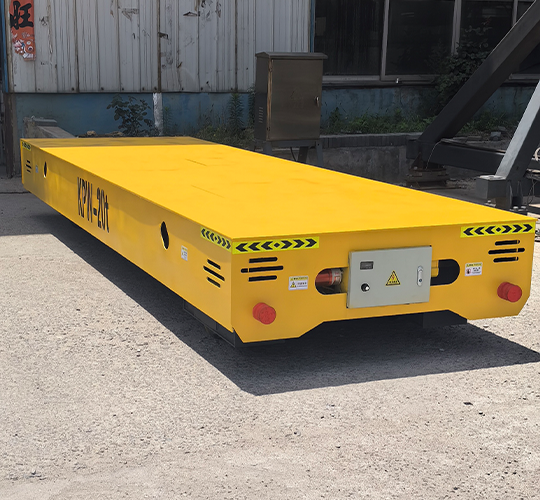
The performance of a Trackless Board Car is typically reflected in the following aspects:
Drive System and Battery Life
Trackless Board Cars generally use electric drive systems, equipped with high-efficiency batteries or other power systems, which allow for long periods of continuous operation. The battery life can vary depending on the model, generally lasting for several hours, meeting different transportation needs. To ensure operational reliability, some Trackless Board Cars are equipped with advanced battery management systems to extend battery life and improve charging efficiency.
Load Capacity and Space Design
The load capacity of Trackless Board Cars varies depending on their intended use. Industrial-grade Trackless Board Cars typically have a strong load capacity and can transport several tons of goods. Meanwhile, vehicles used for tourism or commercial transport focus more on comfort and passenger space, with designs that accommodate multiple passengers.
Intelligent Control and Navigation Systems
Trackless Board Cars are generally equipped with advanced intelligent control systems, including automatic navigation, obstacle avoidance, and route planning functions. Using GPS, LiDAR, cameras, and other sensors, the vehicle can achieve autonomous driving, avoid obstacles, and follow preset routes. The intelligent control system makes the operation of the Trackless Board Car safer and more efficient.
Safety
Safety is a key consideration in the design of Trackless Board Cars. They are typically equipped with multiple safety monitoring devices, such as onboard cameras, emergency braking systems, and stability control systems. Additionally, Trackless Board Cars can be equipped with collision avoidance systems to monitor the surrounding environment and automatically adjust the route.
Trackless Board Cars can be classified into the following categories based on different usage scenarios and requirements:
Industrial Transport Type
This type of Trackless Board Car is designed specifically for large-scale industrial production, warehousing, and logistics. It typically has a high load capacity and excellent stability. These vehicles are often used for the automatic transportation of materials and handling of items within factories.
Commercial and Passenger Transport Type
This type of Trackless Board Car is used in airports, shopping centers, exhibition halls, and other locations to provide convenient transport services for customers or passengers. These vehicles are designed with greater emphasis on comfort and aesthetics, often featuring spacious cabins suitable for multiple passengers.
Sightseeing and Tourism Type
This type of Trackless Board Car is commonly used in tourist attractions and theme parks, offering high levels of comfort and scenic appeal. The vehicle design is typically unique, with comfortable seating and panoramic windows, making it ideal for visitors to enjoy sightseeing and leisure activities.
Urban Public Transport Type
This type of Trackless Board Car serves as a supplement to the urban public transportation system, operating mainly on city streets. They are typically medium-sized, with higher passenger capacity, and equipped with intelligent scheduling systems to meet the demands of rapidly developing urban areas.
The advent of Trackless Board Cars has revolutionized traditional transport tools, playing an essential role in various fields:
Improving Transport Efficiency
The design of Trackless Board Cars makes transport systems more flexible, able to adapt to different transport needs. Especially in complex environments, Trackless Board Cars can complete transportation tasks more efficiently, reducing traffic bottlenecks.
Reducing Costs
Since Trackless Board Cars do not require track construction and often use electric drive systems, their energy consumption and operational costs are much lower than traditional rail systems. Additionally, the use of intelligent control systems makes their operation more efficient, reducing labor and maintenance costs.
Enhancing Service Quality
In commercial, tourism, and other sectors, Trackless Board Cars enhance service quality by providing a convenient and comfortable transport experience, improving the experience of customers and visitors. This makes Trackless Board Cars an indispensable transportation tool for many large commercial facilities and tourist attractions.
As a modern transport tool, the Trackless Board Car has gained widespread use across various sectors due to its flexibility, efficiency, and low cost. Whether in industrial transport, commercial logistics, public transportation, or tourism, Trackless Board Cars play a vital role. With continuous technological advancements, Trackless Board Cars will unlock even greater potential in the future, further enhancing transportation experiences and driving the intelligent and automated development of various industries.
Contact: Ding Jinjun
Phone: 15966038337
Email: 15966038337@163.com
Address: Yangliu Industrial Park, Xintai City, Shandong Province
Central Asia, Southeast Asia, Middle East, South America, Africa
Shandong Longhui Crane Machinery Co., Ltd. was founded in 1992 and is a professional manufacturer of various types of lifting equipment with a registered capital of RMB 318 million. Mainly engaged in the design, manufacturing, installation, renovation, maintenance and other businesses of general bridge cranes, gantry cranes, metallurgical cranes, explosion-proof electric hoists, wire rope electric hoists, European Style Cranes and other products. The products involve 30 series and 6000 categories.
The company covers an area of 120000 square meters and currently has more than 1200 employees, including 32 middle and senior management personnel, 18 senior engineers, 106 intermediate engineers, and 272 engineering and technical personnel. It has more than ten functional departments including design, production, quality inspection, safety, etc., including electrical automation, raw materials, riveting and welding, assembly, heat treatment, machining, electric hoist, maintenance and other workshops. The company has 328 sets of advanced production equipment, more than 300 pieces of various testing instruments and measuring instruments, with good performance and effective calibration, and is a third level qualified measurement unit. The company has sales and service agencies in various provinces, cities, and other regions across the country, radiating to major power plants/steel mills, manufacturing enterprises, industrial and mining enterprises, ports and terminals, and cargo distribution centers.
Rated lifting capacity/rated lifting capacity:
Gn=3t, 5t, 10t, 16t, 20t
Extreme overhang/limitedspan:
0.5m<S<10m
Effective lifting height:
6m≤H<30m
You can choose European electric hoist brands:
DemagCranes,
Koni SWF, Novotranes Crane
Job level/work class: A4 level
Lifting mechanism/Lifting mechanism:
Electric hoist
Rated lifting capacity/rated lifting capacity:
Gn=5, 10t, 16t, 20t,
Limit span:
7.5m≤S<50m
Job level/work class:
JC=25%, A3 level
Lifting mechanism/lifting mechanism:
Single electric hoist, dual electric hoist
Effective lifting height:
6m≤H<30m
Rated lifting capacity/rated lifting capacity:
Gn=5t, 10t, 16t, 20t
Limit span:
7.5m≤S<50m
Effective lifting height:
6m≤H<30m
Job level/workclass:
JC=25%, A3 level
Lifting mechanism/Lifting mechanism:
Electric hoist
gantry cranes, also known as Portal Cranes or gantry hoists, are bridge-type lifting devices that operate on ground tracks. They are widely used in open-air stockyards, warehouse docks, power stations, and shipyards. By supporting the bridge with two legs on either side, these Cranes use electric hoists or hooks to lift and horizontally transport heavy loads, making them an essential tool for achieving mechanization and automation in industrial production.
The main components of a gantry crane include the bridge, large vehicle running mechanism, small vehicle running mechanism, and electrical control system. Its working principle involves the movement of an electric hoist or hook along the main beam while the entire device can move longitudinally along tracks on the ground. This design allows gantry cranes to have a wide coverage area and flexible operation capabilities, making them particularly suitable for occasions where frequent handling of heavy objects is required.
Due to their high efficiency and adaptability, gantry cranes play significant roles across various industries:
Equipment Manufacturing: Used for assembling and transporting large mechanical parts.
Energy and Power: Responsible for lifting heavy equipment during power station construction.
Transportation and Logistics: Employed at ports and railway yards for container loading and unloading.
Automobile and Shipbuilding: Assisting in material handling and assembly on production lines.
Metallurgy and Building Materials: Handling high-temperature or special materials during transportation.
Light Industry: Such as raw material and finished product handling in papermaking industries.
In recent years, China's annual output of gantry cranes has remained stable at around 40,000 to 50,000 units, basically meeting domestic market demand and exporting heavily to international markets. With rapid development and technological upgrades in downstream industries, performance requirements for mid-to-high-end products continue to rise, driving advancements within the industry itself.
Currently, the domestic market exhibits intense competition among numerous players; multinational corporations dominate the mid-to-high-end segment through advanced technologies, whereas domestic enterprises secure market share in specific areas by leveraging cost advantages. Looking ahead, enhancing independent research and development capabilities for core components will be crucial for strengthening global competitiveness.
Overall, under trends towards intelligence and greenification, the gantry crane industry faces broader prospects for growth, providing robust support for modernization efforts across diverse sectors.
xxxxxxxxx
Leave a messageThe company was established in 2013 and is an internet software technology enterprise with multiple independent intellectual property rights.

Copyright © 2022 Suzhou Xiangyun Platform Information Technology Co., Ltd
Site mapMain business area: Beijing Suzhou
This website uses cookies to ensure you get the best experience on our website.



 Phone
Phone
Comment
(0)