 中文
中文 Español
 Français
 العربية
SHANDONG LONGHUI GROUP CO., LTD.Shandong Longhui Crane Machinery
xxxxxxxxx
Leave a message
Smart Flatbed Car: An Innovative Solution for Modern Logistics and Industrial Sectors
With continuous advancements in technology, intelligent products have found widespread applications in various fields, particularly in logistics and industrial production. Among them, the Smart Flatbed Car has emerged as a new transportation tool and has become an integral part of modern production and transportation systems. The Smart Flatbed Car not only enhances work efficiency but also reduces operational costs for businesses, making it one of the key devices in enterprises striving for efficient, intelligent production. This article will explore the concept, applications, technical principles, and future development trends of Smart Flatbed Cars in detail.
A Smart Flatbed Car is an automated transportation tool equipped with an intelligent control system, typically used in industrial, logistics, and warehousing sectors. Unlike traditional flatbed cars, Smart Flatbed Cars do not rely on manual operation or conventional track systems. Instead, they utilize advanced sensors, navigation systems, automatic control technologies, and electric drive systems to achieve autonomous driving. These cars feature functions such as self-positioning, obstacle avoidance, and path planning, allowing them to independently complete transportation tasks, greatly enhancing transportation efficiency and safety.
In modern industrial production, Smart Flatbed Cars are widely used for material transportation on automated production lines. Traditional manual handling or forklift-driven operations are often affected by human error and are less efficient. In contrast, Smart Flatbed Cars can autonomously navigate and control, enabling them to move flexibly in complex environments like production workshops and warehouses. These cars are usually integrated into automated systems on production lines, where they autonomously carry out tasks based on pre-set routes and tasks, reducing human intervention and improving the automation and efficiency of the production line.
In logistics and warehousing, Smart Flatbed Cars can efficiently perform automated material handling. These cars can connect with warehouse management systems (WMS) to automate inventory management. With features such as automatic cargo handling, autonomous navigation, and automatic charging, Smart Flatbed Cars significantly reduce manual operations, improve warehouse space utilization, and enhance material turnover efficiency. They are commonly used in large distribution centers and warehouses, especially for large-scale, high-frequency material handling, reducing operational errors and improving the reliability of logistics systems.
In the medical sector, Smart Flatbed Cars also play an important role, especially in large hospitals. These cars can handle the transportation of medicines, medical equipment, documents, and other supplies. For instance, Smart Flatbed Cars can automatically transport medicines to designated departments or pharmacies, reducing the time and cost associated with manual handling while also improving the accuracy and safety of medication management. The application of Smart Flatbed Cars in large hospitals can alleviate the workload of medical staff, allowing them more time to focus on patient care.
With the promotion of the "Smart City" concept, the application of Smart Flatbed Cars in urban public transportation systems is also gaining attention. For example, Smart Flatbed Cars can be used in trackless trams and autonomous buses to ease traffic congestion. They travel along designated city roads and use intelligent control systems and sensors for precise navigation, providing efficient and safe public transportation services.
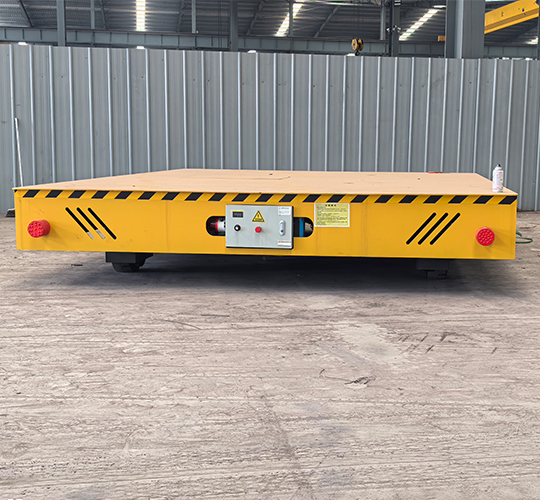
The core technologies of Smart Flatbed Cars include sensor technology, navigation technology, control technology, and electric drive technology. Here is a detailed introduction to these technologies:
The "eyes" of Smart Flatbed Cars rely primarily on sensors. They gather real-time information about their surrounding environment using various sensors, such as LiDAR (Light Detection and Ranging), ultrasonic sensors, cameras, and infrared sensors. LiDAR generates precise 3D maps, helping the flatbed car avoid obstacles and implement efficient path planning. Ultrasonic and infrared sensors are used to detect objects around the vehicle, ensuring that the Smart Flatbed Car can operate safely in complex environments.
The navigation system of Smart Flatbed Cars typically comprises GPS, an Inertial Navigation System (INS), and visual recognition technologies. These navigation technologies allow the Smart Flatbed Car to achieve accurate positioning and autonomous path planning without the need for tracks. GPS is primarily used for outdoor environments, while in indoor settings, inertial navigation systems and visual recognition technologies help the vehicle achieve high-precision positioning and path tracking.
The control system serves as the "brain" of the Smart Flatbed Car, enabling it to carry out autonomous operations. By processing data and making decisions, the control system allows the car to adjust its actions based on environmental changes in real-time. The control system includes a central processing unit (CPU), real-time operating system, and autonomous driving algorithms to ensure that the Smart Flatbed Car performs its assigned tasks in dynamic environments, avoiding collisions and accidents.
Smart Flatbed Cars usually adopt electric drive systems, offering high energy efficiency and low noise. Battery-powered flatbed cars have long-lasting endurance and can be charged via wireless charging or automatic charging stations. The stability and reliability of the electric drive system ensure that the Smart Flatbed Car can operate for long durations without performance issues.
Smart Flatbed Cars can complete the automatic transportation of goods without human intervention. With precise control over paths and speed, they avoid delays and errors common in traditional manual operations, thereby enhancing work efficiency. Particularly in industrial production and logistics warehousing, Smart Flatbed Cars significantly reduce the time and labor costs associated with material transportation, greatly improving production efficiency.
Smart Flatbed Cars can complete large volumes of transportation tasks without relying on manual operations, reducing the need for human labor. By performing transportation tasks autonomously, businesses can reduce their labor resource input, allowing more personnel to focus on higher-value tasks, which lowers labor costs.
Smart Flatbed Cars are equipped with various sensors and safety systems that can detect obstacles and avoid collisions in real-time. Traditional manual handling is prone to safety incidents, but Smart Flatbed Cars can effectively prevent accidents caused by human error, ensuring a safer transportation process.
Smart Flatbed Cars can adapt to complex environments, such as narrow factory workshops, warehouses, and transport corridors. Through advanced navigation and obstacle avoidance features, they can navigate these challenging environments and complete various tasks without being constrained by traditional track-based transportation systems.
With the rapid development of artificial intelligence, the Internet of Things (IoT), 5G technology, and other advancements, the technologies and application fields of Smart Flatbed Cars continue to expand. In the future, Smart Flatbed Cars will evolve in the following areas:
The future Smart Flatbed Car will become more intelligent, capable of handling more complex tasks and making more intricate decisions. For instance, by connecting with cloud-based data platforms, Smart Flatbed Cars can perform real-time data analysis to optimize path planning and task allocation, further improving transportation efficiency.
Smart Flatbed Cars will continue to move toward unmanned operations. Future models may no longer require human intervention, performing all transportation and handling tasks autonomously, thus reducing labor costs and increasing automation levels.
As technology matures, the application scenarios for Smart Flatbed Cars will continue to expand. In addition to industrial and logistics fields, they may also be used in other sectors such as healthcare, education, and smart city construction.
As an advanced automated transportation tool, the Smart Flatbed Car, with its high efficiency, safety, and intelligence, has found widespread applications across various industries. With continuous technological advancements, Smart Flatbed Cars will play an increasingly important role in the future, becoming an indispensable part of modern industrial and logistics systems. With the development of IoT, artificial intelligence, and automation technologies, Smart Flatbed Cars will continue to bring higher productivity, lower operating costs, and safer working environments to industries.
Contact: Ding Jinjun
Phone: 15966038337
Email: 15966038337@163.com
Address: Yangliu Industrial Park, Xintai City, Shandong Province
Central Asia, Southeast Asia, Middle East, South America, Africa

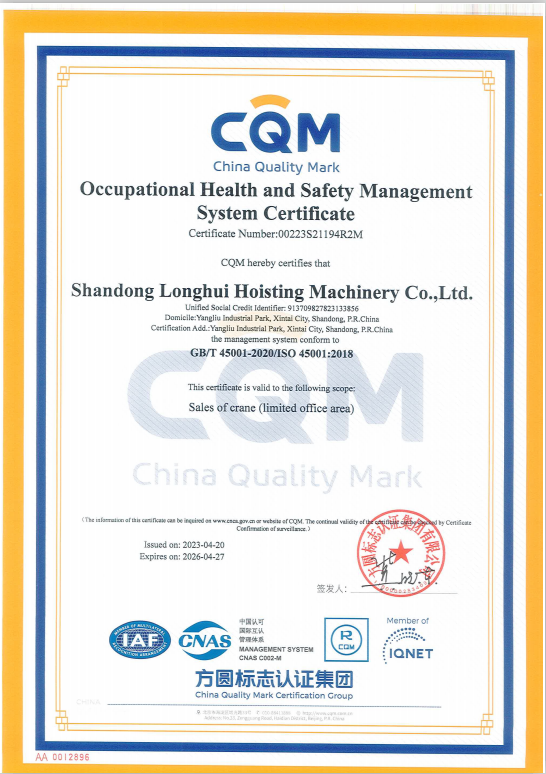
Shandong Longhui Crane Machinery Co., Ltd. was founded in 1992 and is a professional manufacturer of various types of lifting equipment with a registered capital of RMB 318 million. Mainly engaged in the design, manufacturing, installation, renovation, maintenance and other businesses of general bridge cranes, gantry cranes, metallurgical cranes, explosion-proof electric hoists, wire rope electric hoists, European Style Cranes and other products. The products involve 30 series and 6000 categories.
The company covers an area of 120000 square meters and currently has more than 1200 employees, including 32 middle and senior management personnel, 18 senior engineers, 106 intermediate engineers, and 272 engineering and technical personnel. It has more than ten functional departments including design, production, quality inspection, safety, etc., including electrical automation, raw materials, riveting and welding, assembly, heat treatment, machining, electric hoist, maintenance and other workshops. The company has 328 sets of advanced production equipment, more than 300 pieces of various testing instruments and measuring instruments, with good performance and effective calibration, and is a third level qualified measurement unit. The company has sales and service agencies in various provinces, cities, and other regions across the country, radiating to major power plants/steel mills, manufacturing enterprises, industrial and mining enterprises, ports and terminals, and cargo distribution centers.
Rated lifting capacity/rated lifting capacity:
Gn=3t, 5t, 10t, 16t, 20t
Extreme overhang/limitedspan:
0.5m<S<10m
Effective lifting height:
6m≤H<30m
You can choose European electric hoist brands:
DemagCranes,
Koni SWF, Novotranes Crane
Job level/work class: A4 level
Lifting mechanism/Lifting mechanism:
Electric hoist
Rated lifting capacity/rated lifting capacity:
Gn=5t, 10t, 16t, 20t
Limit span:
7.5msSs50m
Effective lifting height:
6msH≤30m
Job level/work class:
A6 level
gantry cranes, also known as Portal Cranes or gantry hoists, are bridge-type lifting devices that operate on ground tracks. They are widely used in open-air stockyards, warehouse docks, power stations, and shipyards. By supporting the bridge with two legs on either side, these Cranes use electric hoists or hooks to lift and horizontally transport heavy loads, making them an essential tool for achieving mechanization and automation in industrial production.
The main components of a gantry crane include the bridge, large vehicle running mechanism, small vehicle running mechanism, and electrical control system. Its working principle involves the movement of an electric hoist or hook along the main beam while the entire device can move longitudinally along tracks on the ground. This design allows gantry cranes to have a wide coverage area and flexible operation capabilities, making them particularly suitable for occasions where frequent handling of heavy objects is required.
Due to their high efficiency and adaptability, gantry cranes play significant roles across various industries:
Equipment Manufacturing: Used for assembling and transporting large mechanical parts.
Energy and Power: Responsible for lifting heavy equipment during power station construction.
Transportation and Logistics: Employed at ports and railway yards for container loading and unloading.
Automobile and Shipbuilding: Assisting in material handling and assembly on production lines.
Metallurgy and Building Materials: Handling high-temperature or special materials during transportation.
Light Industry: Such as raw material and finished product handling in papermaking industries.
In recent years, China's annual output of gantry cranes has remained stable at around 40,000 to 50,000 units, basically meeting domestic market demand and exporting heavily to international markets. With rapid development and technological upgrades in downstream industries, performance requirements for mid-to-high-end products continue to rise, driving advancements within the industry itself.
Currently, the domestic market exhibits intense competition among numerous players; multinational corporations dominate the mid-to-high-end segment through advanced technologies, whereas domestic enterprises secure market share in specific areas by leveraging cost advantages. Looking ahead, enhancing independent research and development capabilities for core components will be crucial for strengthening global competitiveness.
Overall, under trends towards intelligence and greenification, the gantry crane industry faces broader prospects for growth, providing robust support for modernization efforts across diverse sectors.
gantry cranes, widely used in various industries for their efficiency and versatility, are not without common issues that can affect their performance and safety. Regular maintenance and inspection are crucial to address these problems promptly.
Track Problems: Wear, misalignment, or inadequate lubrication of the tracks can lead to increased friction and potential derailment. Regular checks should ensure proper alignment, lubrication, and absence of cracks or defects.
Wheels and Bearings: Worn-out wheels or bearings may cause vibrations and reduce operational stability. Inspections should focus on wheel wear, proper lubrication, and secure mounting.
Girder Deformation: Overloading or fatigue can deform the Crane girder, affecting its load-bearing capacity. Visual inspections and measurements help identify any deviations from standard tolerances.
Loose Bolts and Welds: Loose connection bolts or defective welds compromise structural integrity. Regular tightening and non-destructive testing (NDT) of critical joints are essential.
Brake System Failure: Malfunctioning brakes can result in uncontrolled movements. Checks should include brake lining wear, hydraulic system leaks, and response time tests.
Steel Wire Rope Deterioration: Frayed, corroded, or kinked wire ropes pose significant risks. Regular visual inspections and rope tension checks help prevent failures.
Electrical System Faults: Damaged cables or faulty connections can lead to electrical failures. Inspections should cover cable condition, connector tightness, and grounding reliability.
Hook and Sheave Damage: Cracks or deformation in hooks and sheaves can cause load drops. Periodic examinations using dye penetrant testing or magnetic particle inspection are necessary.
Lubrication Deficiencies: Inadequate lubrication increases wear and tear. A scheduled lubrication program targeting all moving parts is vital for smooth operation.
To mitigate these issues, a comprehensive maintenance plan should be implemented:
Daily Checks: Focus on critical components like brakes, hooks, and limit switches to ensure immediate readiness and safety.
Periodic Inspections: Conduct detailed examinations at regular intervals (e.g., monthly or annually) to assess structural integrity, wire rope condition, and electrical systems.
Preventive Measures: Address minor issues before they escalate into major problems through timely repairs and part replacements.
By proactively identifying and resolving these common issues, gantry crane operators can enhance equipment reliability, extend service life, and maintain a safe working environment.
xxxxxxxxx
Leave a message RELATED
The company was established in 2013 and is an internet software technology enterprise with multiple independent intellectual property rights.

Copyright © 2022 Suzhou Xiangyun Platform Information Technology Co., Ltd
Site mapMain business area: Beijing Suzhou
This website uses cookies to ensure you get the best experience on our website.



 Phone
Phone
Comment
(0)